


- Featured
B2B Edition
Advanced B2B features for enterprise plans.Catalyst
NewCreate stunning, high-performing storefronts that captivate and convert.Feedonomics
Omnichannel feed and data transformation.Multi-Storefront
Manage multiple unique stores from one account.International
Grow your brand across the globe.
- Launch Services
Overview
Chart your path to success with specialised services.Implementation Project Management
Experts to ensure you launch on time and under budget.Solution Architecture
Seasoned advisors to help you best design your store.Data Migration & Optimisation
Expertise on a clean and clear path to migrating your data.Enterprise Launch Package
Personal training on how to set up and launch your BigCommerce Store.
Professional Services Blog Series
Get to know our teams and how they support your success in this Q&A series.

The Global B2B Buyer Behavior Report
This in-depth report provides actionable strategies to help you sell more online.
Explore the
BigCommerce platform
Get a demo of our platform to see if we’re the right fit for your business.
Not ready for a demo? Start a free trial
Modernising B2B Without Disruption: Videcon’s Blueprint for Scalable Ecommerce

Written by
Annie Laukaitis19/03/2026

Modernising B2B Without Disruption: Videcon’s Blueprint for Scalable Ecommerce
Get The Print Version
Tired of scrolling? Download a PDF version for easier offline reading and sharing with coworkers.
A link to download the PDF will arrive in your inbox shortly.
Key highlights:
Modern B2B buyers expect consumer-grade speed and clarity, even when pricing and account logic are complex.
Extending ecommerce from your ERP system reduces friction without disrupting your broader tech stack.
Performance and real-time data accuracy are non-negotiable in high-SKU, contract-driven environments.
When onboarding, integration, and buyer experience align, ecommerce becomes a measurable growth engine.
B2B companies do not lose momentum overnight. They lose it when their buying experience falls behind.
That was the reality for Videcon. After modernising its back office with NetSuite, the UK security distributor found itself with an unsupported ecommerce platform that had been switched off. The systems were evolving. The customer experience was not.
In the Scaling B2B Ecommerce: Strategic Lessons From Videcon’s Digital Transformation insight session, Lance Owide, VP of B2B at Commerce, sits down with John Brown, Senior Marketing Executive & Team Manager at Videcon, alongside Ian Lawton, CTO at Agency 51, and John Barton, Development Director at Agency 51, to unpack how they approached modernisation strategically — without ripping out their entire ecosystem.
Here are a few key takeaways B2B leaders should pay attention to.
Strategic lessons from Videcon’s digital transformation
B2B buyers expect speed and clarity, even when the backend is anything but simple.
Lance Owide: You’ve said buying online needed to feel the same as calling a regional rep. What did that mean in practise?
John Brown: “People who shop online need ease. They need it to be navigational. The specification of these cameras, these recorders, this fire equipment — that’s at the forefront of their purchasing decisions. They need to be able to make an order easily at any point of the day and have access to the right information.”
Ian Lawton: “B2B buyers aren’t just buyers. They’re people who shop on Amazon in the evening. They’re conditioned to expect instant load times, clean interfaces, and zero friction. The difficulty is that B2C is relatively simple — one price for everyone. B2B is layered with negotiated contract rates, tiered pricing, credit limits, and account restrictions.”
Barton: “When users log in, the site effectively transforms. It must instantly reconfigure to show their specific pricing, catalogue, and stock levels. If the user has to wait five seconds for a live price lookup every time they visit a product page, we’ve failed.”
Key takeaway.
In B2B, complexity is inevitable. What differentiates market leaders is their ability to absorb that complexity internally while delivering a buying experience that feels fast, intuitive, and frictionless to the customer.
Modernisation works best when ecommerce extends your ERP, not competes with it.
Owide: You had just rolled out NetSuite across the business. Why was it so important to modernise ecommerce without ripping and replacing your entire ecosystem?
Brown: “We’d just established the relationship with NetSuite and it covers every aspect of Videcon — finance, product management, invoicing, and customer management. We’d put a lot of time, effort, and money behind that, so it was really important that we kept everything there in place and made that work for the website.”
Lawton: “Right from the beginning, the main principle was that NetSuite would be the single source of truth. Products, pricing, stock levels, customer information, and credit limits — all that master data lives in NetSuite. We’re talking literally millions of price records. Waiting hours for that data to sync just isn’t acceptable. Customers need accurate prices and stock levels.”
Barton: “We had two options. Call NetSuite every time a product page loads, which creates lag. Or store pricing inside BigCommerce so it’s instant. We chose to store it natively and use batch updates to keep it in sync. That gives you the speed of a B2C site with the data integrity of a complex B2B system.”
Key takeaway.
Modern B2B architecture starts with a disciplined system of record. When your ERP remains the single source of truth and ecommerce extends it seamlessly, you protect data integrity, reduce operational risk, and deliver real-time accuracy without sacrificing performance.
Real transformation shows up in measurable results, not just better architecture.
Owide: You’ve seen some standout results — including a 217% increase in conversion rate and a 93% reduction in acquisition costs. What’s driving those improvements?
Brown: “Accessibility has been key. The website needs to be accessible, and the ease of applying for an account, getting that approved, and turning that around into a spending customer can now be somewhere between 20 and 40 minutes with us — which for the trade business is hugely beneficial.
We also run a lot of digital marketing campaigns. We’re currently trying to drive as much traffic to the website as possible.”
Key takeaway.
Modernisation proves its value through results. Faster onboarding, stronger conversion, and more efficient acquisition show that experience, integration, and marketing are aligned to drive sustainable growth.
The final word
Digital transformation in B2B rarely starts with a website. It starts with a shift in expectations.
For Videcon, the inflection point came when the systems behind the business had evolved, but the buying experience had not. Instead of ripping out their ecosystem, they extended it. They anchored ecommerce to NetSuite as the single source of truth, prioritised buyer experience at every step, and treated performance as a non-negotiable.
The result was not just a faster site. It was measurable growth — including a 217% increase in conversion rate and a 93% reduction in acquisition costs — alongside a more efficient path from trade application to first order.
For B2B leaders, the lesson is clear: modernisation does not require disruption. It requires clarity of strategy, tight integration, and an obsessive focus on reducing friction for buyers.
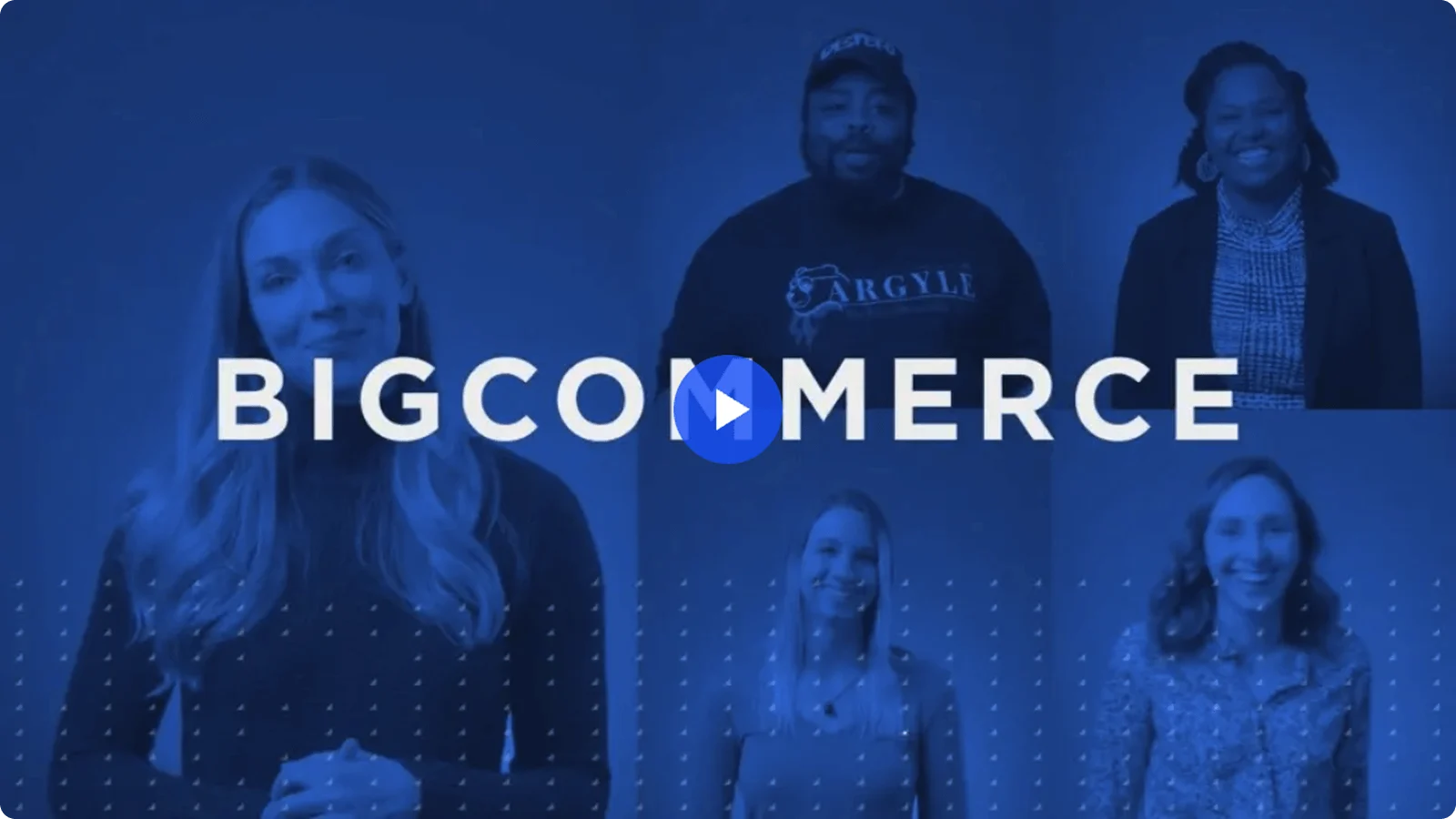
Watch the full conversation and dive deeper into the technical and strategic decisions behind Videcon’s transformation.
There's a lot to love ❤️
Watch a demo to see the BigCommerce platform in action.