


- Featured
B2B Edition
Advanced B2B features for enterprise plans.Catalyst
NewCreate stunning, high-performing storefronts that captivate and convert.Feedonomics
Omnichannel feed and data transformation.Multi-Storefront
Manage multiple unique stores from one account.International
Grow your brand across the globe.
- Launch Services
Overview
Chart your path to success with specialised services.Implementation Project Management
Experts to ensure you launch on time and under budget.Solution Architecture
Seasoned advisors to help you best design your store.Data Migration & Optimisation
Expertise on a clean and clear path to migrating your data.Enterprise Launch Package
Personal training on how to set up and launch your BigCommerce Store.
Professional Services Blog Series
Get to know our teams and how they support your success in this Q&A series.

The Global B2B Buyer Behavior Report
This in-depth report provides actionable strategies to help you sell more online.
Explore the
BigCommerce platform
Get a demo of our platform to see if we’re the right fit for your business.
Not ready for a demo? Start a free trial
From Operational Bottleneck to Growth Driver: Toolden’s Kit Builder Transformation

Written by
Annie Laukaitis08/04/2026

Key highlights:
Legacy bundle functionality created operational friction and limited scalability as kit volume increased.
Leveraging BigCommerce’s flexible, API-driven architecture, Toolden built a bespoke Kit Builder with partner Xtensive.
The new experience improved conversion, increased average order value, and reduced kit creation time from 20+ minutes to near-instant configuration.
In the first six weeks of 2026, revenue increased by more than 40% following the redesigned kit experience.
Toolden’s growth created a new kind of pressure.
In 2025, Toolden delivered strong year-over-year revenue growth, accelerating the company’s rise as one of the UK’s fastest-growing online power tools and hardware retailers serving trade professionals and serious DIY customers nationwide.
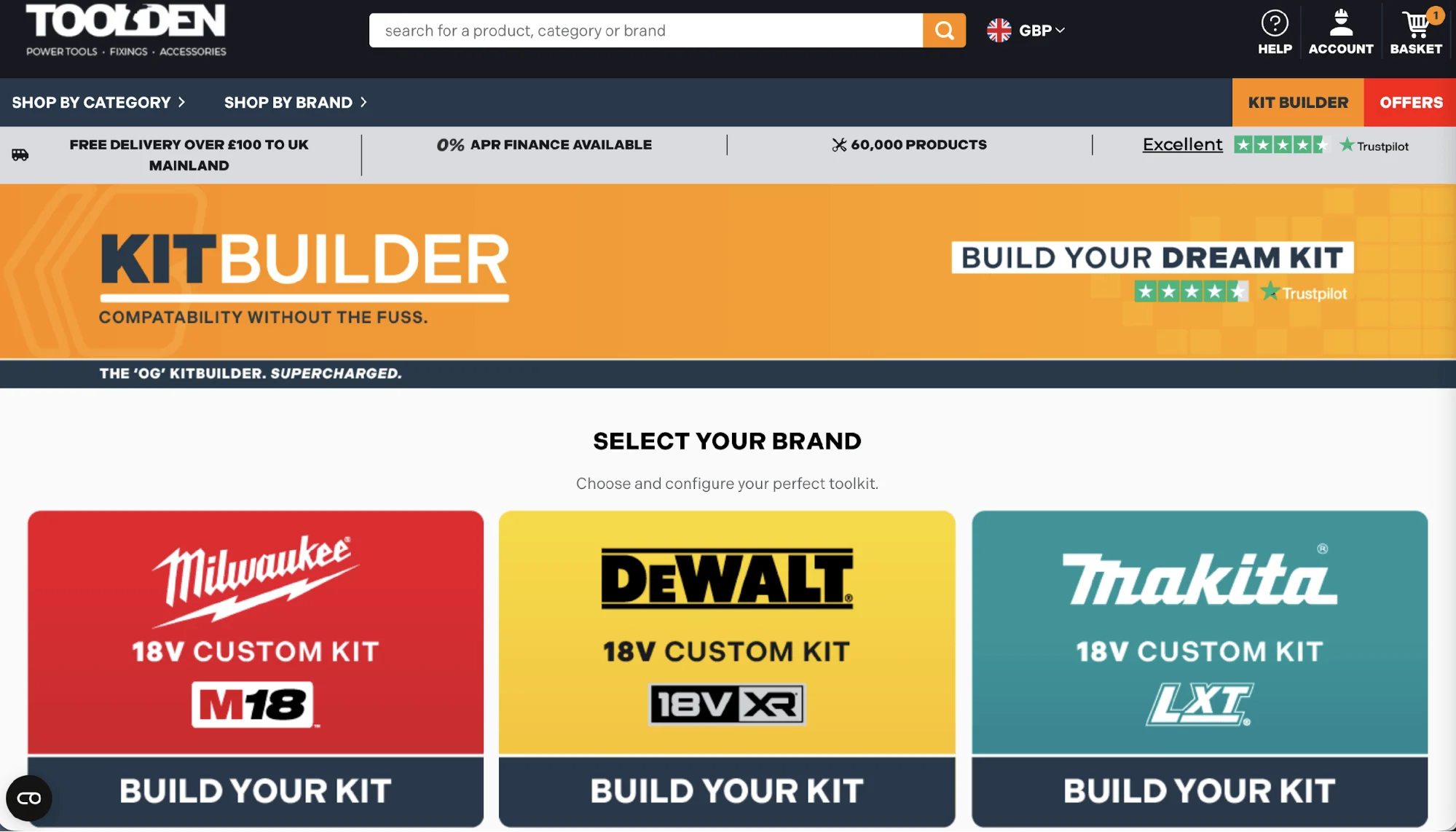
A major driver of that momentum was configurable toolkits. Customers weren’t just purchasing individual products. They were building complete kits, combining tool bodies, batteries, chargers, and accessories into job-ready configurations.
The demand was exactly what the team wanted. Managing it was another story.
As kit orders increased, so did the complexity behind them. Existing bundle functionality wasn’t designed to scale at this level. Toolden had already attempted two kit builder solutions, but neither delivered the flexibility required to support continued growth.
At that point, the question wasn’t whether kit building mattered. It was how to support it properly — in a way that could scale with the business.
“While revenue was growing, the existing system capped scalability. We needed a solution that would remove friction, increase basket size, and support sustained commercial acceleration,” shared Eddie Grovu, Growth and Ecommerce Director at Toolden.
With a strong foundation already in place, the opportunity became clear: redesign kit configuration to support the next stage of growth.
When growth outpaces product configuration
Toolden’s customers rarely purchase a single product. Trade buyers assemble complete working kits, combining tool bodies, batteries, chargers, and accessories into one streamlined purchase.
At first glance, traditional bundle functionality appeared to support that behaviour. As the business scaled, its limitations became harder to ignore.
The legacy approach introduced several challenges:
Static bundles tied to rigid category structures
Manual configuration processes that required significant admin time
Merged or custom SKUs that created inventory inaccuracies
Friction in the buying journey when customers attempted to build multi-item kits
Each configuration required meaningful behind-the-scenes effort. Creating or updating a bundled product could take more than 20 minutes. As demand increased, that manual workload compounded.
Growth was not the problem. Architecture was.
Toolden needed more than incremental improvements. The business needed a configuration engine built around how its customers actually buy.
Building a flexible kit builder on BigCommerce
Open architecture enabled deep customisation without compromising operational control.
Toolden did not need a patch. It needed a purpose-built solution aligned with its commercial model.
To deliver that, it partnered with Xtensive Web Design to design and develop a fully bespoke Kit Builder on BigCommerce. The objective was clear: remove structural constraints while preserving the stability and native functionality of the core platform.
BigCommerce’s API framework made that possible. Rather than forcing kit logic into rigid category structures, Xtensive decoupled configuration logic from the catalogue itself. This allowed Toolden to expand functionality without compromising inventory accuracy or checkout performance.
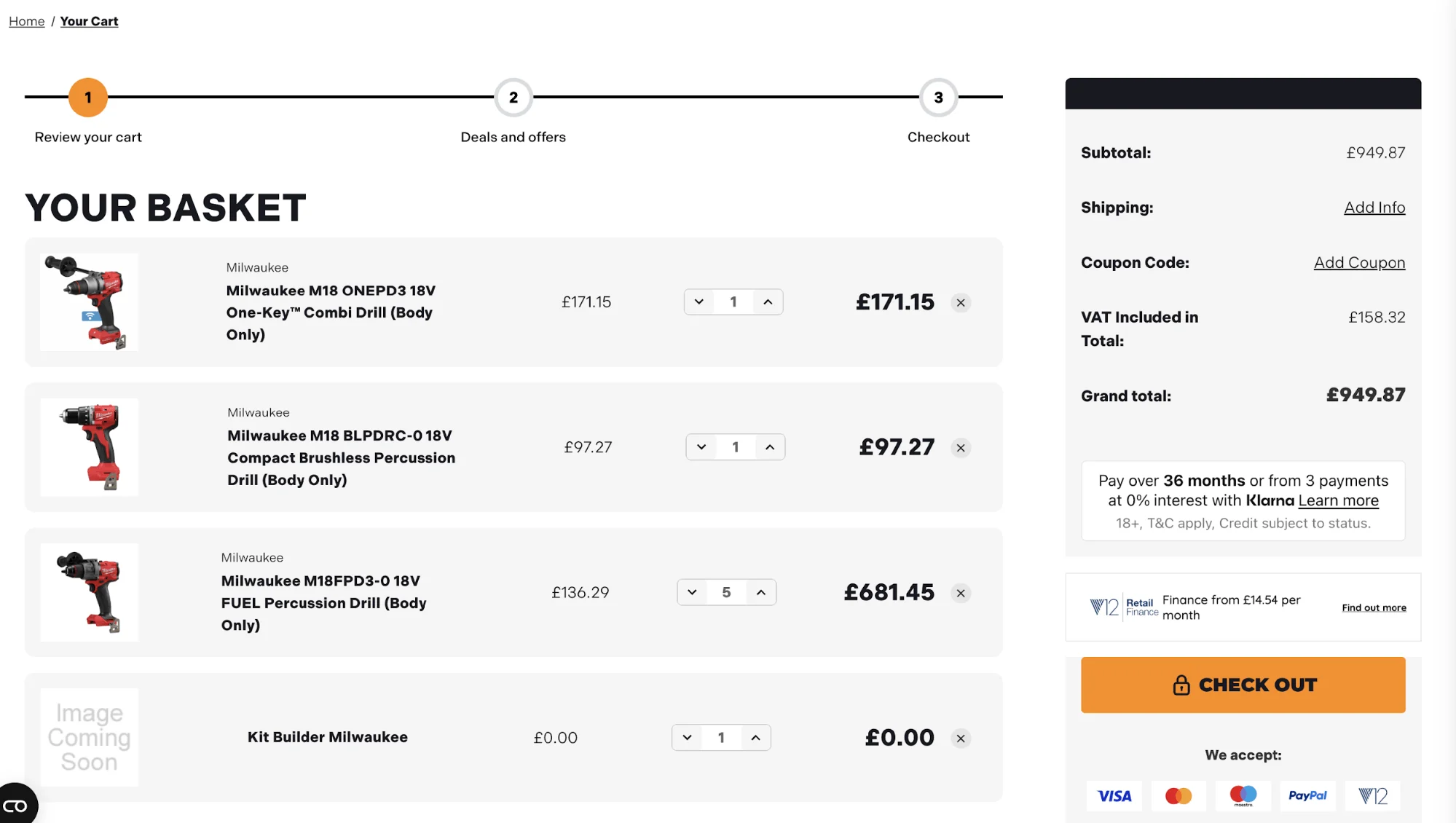
Each item within a kit remained a native BigCommerce product. That meant:
Accurate, real-time inventory tracking
Clean reporting and order management
No reliance on merged or artificial SKUs
Full compatibility with the existing checkout experience
For B2B ecommerce teams, that balance is critical. Customisation must strengthen the business, not introduce new operational risk.
A frictionless configuration experience aligned with real-world buying behaviour.
With the architectural foundation in place, Toolden could focus on the customer experience.
The new Kit Builder introduced:
A dynamic, mobile-optimised configuration interface
Real-time product search and assignment via the BigCommerce API
Intelligent brand-based kit grouping
Embedded upsell and promotional messaging within the build journey
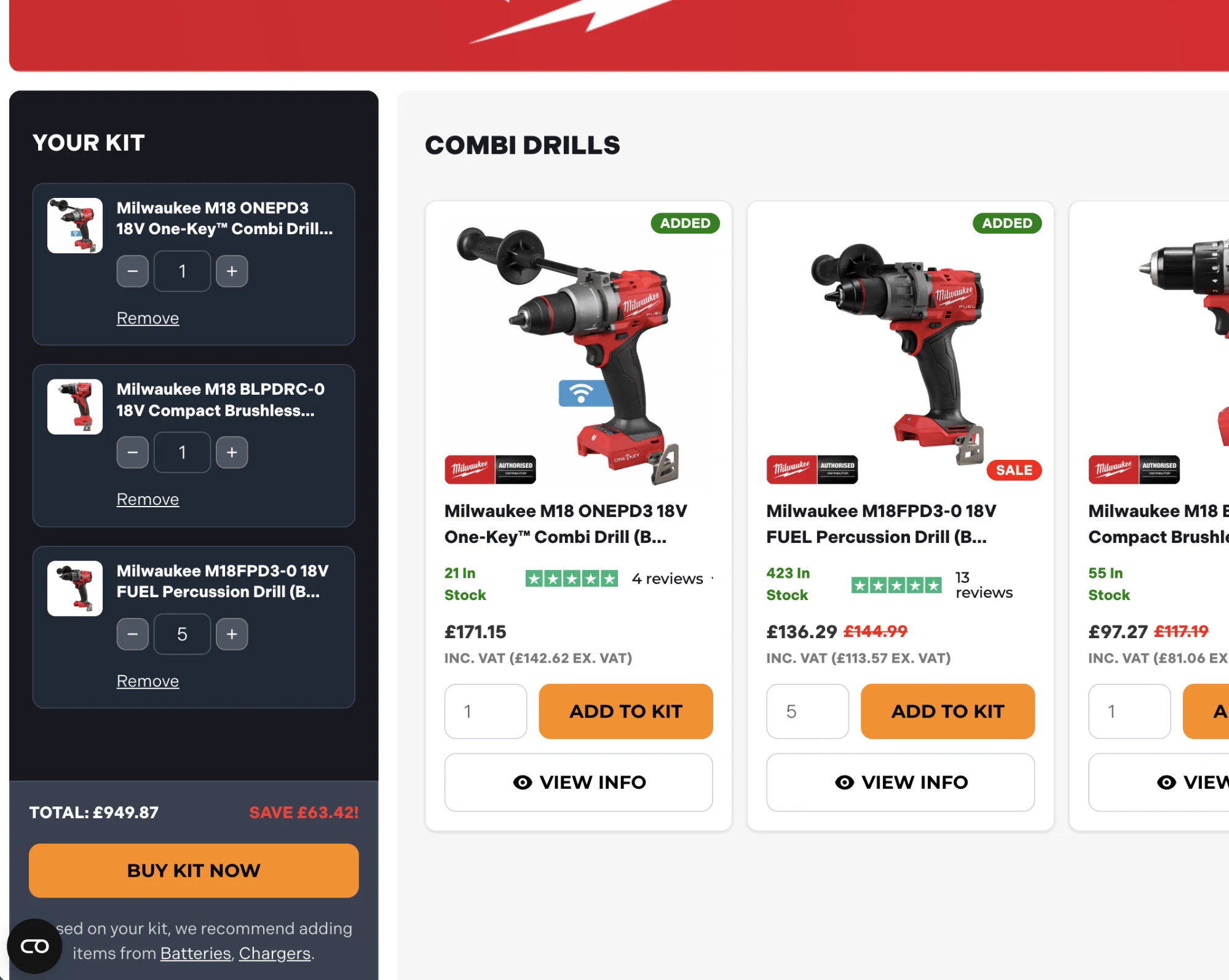
Customers no longer needed to navigate between multiple product pages to assemble compatible components. They could build complete solutions within a single, guided experience.
This shift was structural, not cosmetic. Toolden moved from static bundles to a scalable configuration engine designed for speed, clarity, and flexibility.
From operational constraint to revenue acceleration
The impact of the new Kit Builder was immediate.
Toolden had already delivered strong year-over-year revenue growth in 2025. After launching the redesigned kit experience, performance accelerated again. In the first six weeks of 2026, revenue increased by more than 40% compared to the same period the previous year, continuing the strong momentum from 2025. The growth directly correlated with improvements to kit configuration and checkout.
The momentum was visible across the business:
Stronger conversion on complex kit purchases, as customers moved through configuration with greater speed and confidence.
Higher average order value, driven by intelligent grouping and embedded upsell messaging.
Dramatically reduced administrative effort, with kit creation time dropping from more than 20 minutes to near-instant configuration.
Improved inventory accuracy, by adding kit components to checkout as native BigCommerce products.
Kit configuration no longer limited scalability. It became a structurally sound, revenue-driving capability built to support continued growth.
The final word
What began as an operational bottleneck is now one of Toolden’s most scalable growth drivers.
By redesigning how kit configuration works within BigCommerce, Toolden removed friction from a strategically important revenue stream while preserving full control of inventory, checkout, and reporting.
For B2B ecommerce brands, the lesson is practical. As product complexity increases, the answer isn’t to simplify what customers buy. It’s to build systems that support how they buy.
Flexible platform architecture makes that possible. It allows businesses to innovate beyond standard functionality without sacrificing operational integrity.
“For enterprise retailers selling complex product combinations, BigCommerce, supported by a specialist partner like Xtensive, provides the flexibility and scalability to convert operational constraints into measurable revenue growth,” remarked Grovu.
Read the full Toolden case study to learn more about its success on BigCommerce.
⏰ Isn't about time that you evaluated your ecommerce platform?
Request a demo to see how the BigCommerce platform is different.