






PPC Ecommerce: A Complete Guide to Advertising Your Online Store
Get The Print Version
Tired of scrolling? Download a PDF version for easier offline reading and sharing with coworkers.
A link to download the PDF will arrive in your inbox shortly.
Key highlights:
Ecommerce PPC is a paid model: Bid on keywords and pay only when a shopper clicks. Buy traffic instead of earning it through SEO.
PPC delivers near-instant visibility and real-time feedback: Ideal for launches, promotions, and competitive categories.
Leverage a strong ecommerce PPC strategy: Rests on keyword research, sharp ad copy, strong creative, and a high-quality score that lowers your CPC.
Gain traction on major ecommerce ad platforms: Google Ads (including Google Shopping ads), Facebook, Instagram, and TikTok.
PPC best practises: Optimise landing pages, add negative keywords, remarket to past visitors, and use AI for bidding and testing.
Here's how the model works: advertisers bid on keywords related to their products. When a shopper searches for those terms, the ad is displayed. If they click, the advertiser pays a predetermined fee. This is the foundation of ecommerce paid search — and it's exactly why the approach is called "pay-per-click."
Unlike ecommerce SEO, which requires a long-term commitment to content marketing and keyword optimisation, ecommerce PPC offers immediate visibility to potential customers, increasing your chance to make a sale. Since PPC advertising for online stores allows you to target users by specific demographics, locations, and interests, every dollar of ad spend works harder. Cha-ching.
What is PPC ecommerce?
PPC ecommerce is a form of paid advertising where online stores bid on keywords and pay a fee each time a shopper clicks on one of their ads. These ads appear on search engines, social media platforms, and websites across the web, which sends traffic straight to product or category pages. In short, it’s a way to buy targeted visits to your store, rather than waiting to earn them through SEO.
Here's how ecommerce PPC works in practise: Step #1: Choose the keywords or audiences you want to reach, set a maximum bid, and write an ad that links to a relevant landing page. Step #2: When a shopper searches for a matching term, your ad enters an auction against other advertisers. Step #3: If it wins and the shopper clicks, you pay the agreed cost-per-click (CPC), and they land on your site, eager to browse or buy.
But how does ecommerce PPC work?
Running a successful ecommerce PPC campaign comes down to a few core, yet humble skills: researching the right keywords, writing copy that earns clicks, and continuously testing creative to find the combinations that convert.
Keyword research.
Advertisers must identify the keywords their audience uses most often when shopping for their product, then building those terms into the campaign so ads reach the right shoppers.
"Seed" (short-tail) keywords are broad, general terms tied to the business. For an online store selling running shoes, seed keywords might include "running shoes," "athletic footwear," or "sports shoes." Long-tail keywords are longer, more specific phrases shoppers actually type, like "running shoes for flat feet" or "best trail running shoes for women." Long-tail terms usually convert because they signal clearer intent: someone searching "best trail running shoes for women" is closer to buying than someone searching the simple term, "shoes."
Tools such as SEMrush or Google Keyword Planner surface additional keyword ideas and search volume. Most advertisers target medium-to-high-volume keywords to stay competitive without overpaying for the most expensive terms.
Copywriting.
Compelling ad copy draws attention and encourages clicks. On search platforms, most ads now run as responsive search ads (RSAs), which are Google's default format. Instead of writing a fixed advertisement with one single set of ad copy, you supply multiple headlines and descriptions, which lets Google test combinations to find the highest-performing messaging for each shopper and query.
Strong copy communicates your brand's value proposition and ends with a clear call to action, such as "Shop the sale" or "Get free shipping." For a running shoe store, a bold headline paired with a description highlighting free returns creates a strong messaging foundation: For example: Headline: Trail Shoes Built for Distance Description: Tackle long miles with lightweight, durable trail running shoes designed for comfort, grip, and stability. Find your fit with free shipping and returns. Effective copywriting is also tailored to the platform: search ads need a catchy headline to stand out, while social ads pair nicely with dynamic images or video. Every platform has its own crowd, so speak their language. You can think of each channel as a different party. The way you’d chat at a backyard barbecue probably won’t land at a black-tie gala.
Video and image assets.
Visually appealing ads earn more clicks than text alone. Consistent logos, colour schemes, and visual elements deepen brand awareness. Video can show a product in action, highlight features, or convey the general feel of a product — whether aspirational or playful. A running shoe brand may feature a short clip of a shoe flexing on a trail, or a Facebook and Instagram carousel, showing several colourways in a single ad.
Quality score.
Quality score is Google's 1-to-10 rating of how relevant your ad is to your chosen keywords, based on the ad copy and the landing page behind it. A higher score means your ad runs more often and at a lower cost-per-click (CPC), so improving quality score directly lowers what you pay.
Google determines the score based on three factors:
Keyword relevance: how well the keywords in your ad group align with ad copy and the shopper's search query.
Expected click-through rate (CTR): the likelihood your ad gets clicked, based on its historical performance and relevance.
Landing page experience: how relevant and usable the page is once a shopper clicks through.
For example, an ad targeting "waterproof trail running shoes" linking to a dedicated waterproof trail shoe page will score far higher than the same ad pointing to a generic homepage.
A/B testing.
PPC campaigns require constant A/B testing to find the winning combination. Marketers can alternate ad copy (headlines, descriptions, CTAs), visual assets, and ad extensions (site links, callouts, structured snippets) to raise CTR. It's also worth testing designs, layouts, and CTAs on your landing page, since that’s where “maybe later” becomes “add to cart.”
For instance, a running shoe store might test "Free 2-Day Shipping" against "30-Day Free Returns" as a headline to see which drives more buys. Advertisers can also compare bidding ecommerce marketing strategies, such as manual versus automated bidding, to find the most cost-effective approach.
Conversion rate optimisation.
In a perfect world, everyone who clicks your ad becomes a customer. Conversion rate optimisation (CRO) is a set of techniques used to increase the share of visitors who take a desired action, such as making a purchase or subscribing to a newsletter, after clicking on a PPC ad.
This includes A/B testing your ad copy, creative, and landing pages to see what resonates most with customers. Small improvements like faster page load times, better ad extensions, and visible reviews or security badges can also have a big impact.
Monitoring the PPC campaign.
PPC ads need constant monitoring and direction. Using real-time performance data, advertisers make ongoing adjustments to keep campaigns efficient. Here are the essentials to track:
KPIs: Common metrics include CTR, conversion rate, cost-per-conversion, and return on ad spend (ROAS), which measures the revenue earned for every dollar spent on advertising. A ROAS of 4:1, for example, means you earn $4 in sales for every $1 of ad spend.
Conversion tracking: Monitor the actions shoppers take once they click your ad.
Segmentation: Break down performance by keyword, ad group, demographics, and geographic location.
Budget: Keep an eye on both daily and overall spend.
How ecommerce PPC boosts online sales
Paid search puts your products in front of shoppers the exact moment they're looking to buy, and that intent shows up in the numbers: the average conversion rate for ecommerce Search Ads on Google is 2.81%, comfortably ahead of the 1.8 – 2% most online stores see from general traffic. Here's where that advantage comes from.
Immediate traffic and feedback.
PPC drives qualified visitors to your store within hours of launching, not the months SEO can take. The moment a campaign goes live, your ads appear at the top of search results or on relevant websites, driving traffic to your product pages almost instantly. Just as valuable, the ad platform reports performance in real time, so you can see which keywords and creatives are working and shift budget toward winners the same day rather than waiting on a quarterly content cycle.
High-quality conversions.
Because PPC targets shoppers by keyword and intent, the visitors it sends are far more likely to buy than general traffic. Ads are matched to a defined audience based on the keywords and characteristics you choose, so the people who click are already interested in what you sell. When your ad targets a high-intent query like "buy waterproof hiking boots," you reach someone ready to purchase, not someone idly browsing, which is exactly why these clicks convert at higher rates than untargeted traffic.
Remarketing to ecommerce website visitors.
Remarketing recovers sales you would otherwise lose by bringing back shoppers who left without buying. Browser cookies identify past visitors as they browse other sites in the same ad network, letting you serve them ads even after they have moved on to the next site. You can segment these audiences and tailor the message to each one: a cart abandoner might see an ad featuring the exact product they left behind, plus a first-time-buyer discount, while a shopper who only viewed a category page might respond better to a broader product feed. Either way, your brand stays top of mind and shoppers get a nudge back toward checkout.
There's a lot to love ❤️
Watch a demo to see the BigCommerce platform in action.
PPC ecommerce challenges to avoid
PPC delivers fast results, but it comes with real trade-offs that every online store should weigh before committing to a budget. Here are the four challenges that catch ecommerce businesses off guard most often.
High costs for competitive keywords.
The most popular, high-traffic keywords are also the most expensive, and prices keep climbing. When many advertisers chase the same term, they bid on the cost-per-click to secure the top spots, since the highest bidder's ad wins the spotlight. Those costs are rising across the board: the average Google Ads CPC in the US reached $5.26 in 2025, up from $4.66 in 2024. Ecommerce and retail clicks tend to land in the $1 – $3 range, but broad, high-demand terms run higher.
This is where keyword strategy pays off: a generic head term like "cotton shirt" pits you against every major retailer and clothing brand bidding for the same click, while a long-tail term like "white organic cotton shirt made in the USA" draws fewer competitors, costs less per click, and signals stronger purchase intent. Targeting specific, lower-competition keywords is often the difference between a profitable campaign and one that drains a budget.
Steep learning curve.
PPC platforms are powerful but genuinely hard to master, which can trip up newcomers. Tools like Google Ads and Meta Ads have sophisticated interfaces built for advanced users, and running campaigns demands data literacy, plus a constant effort to keep up with shifting features and best practises. Keyword research alone is a skill in its own right, requiring a grasp of search intent and competitor analysis. Misread the platform early on and you can burn through a budget on poorly targeted clicks before you understand what went wrong.
Requires constant investment.
PPC is not a "set it and forget it" channel; it demands ongoing time and money to stay competitive. Advertisers must continuously adjust bids, refine keywords, refresh creative, and A/B test to keep performance from sliding. As a rough benchmark, managing PPC effectively for a mid-size store takes at least 5 – 10 hours a week of active optimisation, and the workload is heavy enough that many larger businesses hire dedicated staff or freelancers to run campaigns full-time. Pause that upkeep and your results tend to slip while costs creep.
Attribution complexity.
Figuring out which ad actually drove a sale is trickier than it sounds, and getting it wrong can cost you. Picture a typical shopper: they click a Google search ad, wander off, spot an Instagram ad a few days later, then come back through a branded search before they finally buy. So which of those moments gets the credit? That's the whole puzzle of multi-touch attribution, and it's only gotten harder as third-party cookies disappear and people hop between devices.
Here's why it matters. If your data hands all the credit to that last click, you might cut the upper-funnel ads that kicked off the journey in the first place — quietly starving the campaigns that were doing the real work. That's why solid conversion tracking and a clear attribution model are what let you spend with confidence.
How much does ecommerce PPC cost?
Most ecommerce stores pay between $1.80 and $3 per click on Google Search, with social platforms running cheaper: Meta clicks typically land around $0.20 – $0.80, and LinkedIn around $5 – $8. In practise, small-to-mid-size stores usually start with monthly budgets in the $1,000 – $10,000 range, then scale once they see which campaigns turn a profit. Your actual cost depends on your industry, the competitiveness of your keywords, and how well your campaigns are optimised, but the benchmarks below give you a realistic starting point.
Average CPC benchmarks by platform.
Cost-per-click varies widely depending on where your ads run and who you're competing against. Here's how the major ecommerce ad platforms compare on 2026 data:
Platform | Typical Ecommerce CPC | Best For |
Google Search | $1.80 – $3.00+ | High-intent, direct conversion |
Google Display | $0.50 – $0.65 | Broad brand awareness |
Meta (Facebook/Instagram) | $0.50 – $0.80 | Affordable social targeting |
$5.00 – $8.00+ | B2B & Professional networking | |
X (Twitter) | ~$0.38 | News, tech, & quick engagement |
$0.78 – $1.50 | Visual discovery & E-commerce | |
Amazon | ~$0.91 | In-market buyers at point of sale |
A key takeaway: search platforms charge more per click but capture shoppers with high purchase intent, while social platforms deliver cheaper clicks that often need more nurturing to convert. The right mix depends on your margins and how far down the funnel your buyers tend to go.
What drives PPC costs up or down.
Three levers move your cost-per-click more than anything else. The first is competition: when many advertisers bid on the same keyword, the auction price rises, which is why broad terms like "flip flops" cost far more than specific long-tail phrases. The second is quality score, Google's 1 – 10 rating of ad relevance; a strong quality score can cut your costs by 20 – 40% since Google rewards relevant ads with lower prices and stronger placements. The third is your bid strategy: manual bidding gives you tight control over maximum CPC, while automated strategies like target ROAS or target CPA let Google optimise bids toward a goal, which often improves efficiency once the campaign has enough conversion data to source.
How to calculate a realistic starting budget.
Work forward from the traffic you want rather than picking a number at random. Estimate your average CPC for the platform you're starting on, decide how many clicks you need to gather meaningful data, and multiply them together. For example, at a $2 CPC, generating 1,000 clicks in a month costs roughly $2,000. As a rule of thumb, give a campaign enough budget to produce at least 50 – 100 conversions per month before judging its performance, since smaller samples won't tell you reliably what's working. Starting lean and scaling winners beats spreading a thin budget across dozens of untested keywords.
How to work backwards from your margin to a target CPC.
The most disciplined approach starts with your unit economics and derives the most you can afford to pay per click. The formula is simple:
break-even CPC = profit per order × conversion rate
Say your average order earns $32 in profit and your landing page converts 3% of clicks. Your break-even CPC is $32 × 0.03 = $0.96, meaning any click costing less than that turns a profit. To hit a specific return-on-ad-spend (ROAS) target, bid below break-even by your desired margin: aiming for a 2:1 return here would mean keeping CPC under roughly $0.48. Anchoring bids to your margins this way keeps campaigns profitable as costs rise, instead of chasing clicks you can't afford to convert.
PPC platforms for ecommerce marketing
PPC advertisers have a range of ad platforms to choose from, and the best one depends on how your customers shop. Below are the platforms that matter most for ecommerce, along with how each platform helps you get ahead.
Which platform should you start with? For most online stores, Google is the natural starting point since it captures shoppers actively searching for products with intent to buy, and Google Shopping ads put your product image, price, and store name directly in those results. Once Google is profitable, brands with visually-driven or impulse-friendly products (fashion, beauty, home goods, etc.) typically expand to Meta and TikTok to build demand and retarget, while budget-conscious businesses add Microsoft Ads for cheaper clicks. In short: start where buying intent is highest (Google), then layer on social platforms to reach shoppers earlier in their journey.
Facebook.
Facebook's ad platform offers some of the most robust audience targeting available, letting advertisers reach users by demographics, interests, behaviours, and more. Facebook ads can appear in the Facebook feed, Stories, the Instagram feed, or the Audience Network of third-party apps. To measure results, install Meta Pixel and manage campaigns through Meta Business Suite, which tracks actions shoppers take on your site once they click an ad. For ecommerce specifically, Meta's Advantage+ Shopping Campaigns are the 2024 automation upgrade: they use machine learning to handle audience targeting, placement, and creative combinations automatically, which often outperforms manual setup for online stores. Supported formats include photo, video, slideshow, and Collections ads.
Instagram.
Instagram's ad platform is tightly integrated with Facebook, since both are owned by Meta, so it shares the same targeting options, analytics dashboard, and Advantage+ automation.
The main difference is placement and audience: Instagram skews more visual and younger, and it offers Stories ads (full-screen vertical ads between users' Stories), alongside placements on the main feed and Explore page. For product categories that sell on aesthetics, like fashion, beauty, and home decor, Instagram's image and video-first formats tend to cut through the noise.
Google.
The world's largest and most popular PPC platform, Google Ads (formerly Google AdWords) advertises across Google's search engine and its vast network of partner sites. Advertisers bid on keywords to display text search ads, but for ecommerce the bigger opportunity is Google Shopping ads, also known as Product Listing Ads (PLAs). These show your product image, price, and store name directly in search results, and they dominate retail. Google Shopping ads account for roughly 76% of US retail search ad spend, while running a lower-average CPC than text-search ads.
Google also offers Performance Max, an AI-driven campaign type that's become central to ecommerce in 2024 – 2025. A single Performance Max campaign serves ads across all of Google's surfaces at once (Search, Shopping, YouTube, Display, Gmail, and Maps), using your product feed and automated bidding to chase a conversion or ROAS goal. It trades manual control for reach and automation, and works best once you've got conversion tracking and a clean product feed in place.
TikTok.
TikTok for Business centres on short-form video and offers targeting options including Custom Audiences for retargeting and Lookalike Audiences to find users similar to your customers. Its suite of creative tools, with music, text, and effects, helps brands produce native-feeling ads that connect with their target audiences. The major ecommerce development is TikTok Shop, which launched as a full shopping surface in 2023 – 2024 and lets users discover and buy products without leaving the app. Shop-linked ads compress the path from discovery to purchase, which can lower acquisition costs compared to sending shoppers to an external site. TikTok works great for brands with visually engaging or impulse-buy products and a younger target audience.
Microsoft Ads / Bing Shopping.
Microsoft Ads (formerly Bing Ads) is the most overlooked platform for budget-conscious ecommerce businesses, and that's exactly its advantage. Because fewer advertisers are bidding in Microsoft's auctions, your clicks cost less. In fact, the average search CPC runs about $1.54, roughly a third cheaper than Google for the same kinds of queries. The audience leans older, wealthier, and more desktop-based than Google's, which is a great fit for certain product categories. Microsoft Ads also has Bing Shopping for product listings, and you can usually import your existing Google Ads campaigns straight over. Easy peasy.
So if you're trying to stretch your budget or reach a slightly different crowd, Microsoft Ads makes a solid sidekick to a Google-first strategy.
⏰ Isn't about time that you evaluated your ecommerce platform?
Request a demo to see how the BigCommerce platform is different.
PPC ecommerce management best practises
Strong PPC management is a mix of disciplined setup and constant refinement, from optimising landing pages to testing creative, tightening bids, and tracking every conversion. Here's how the essential best practises work.
Landing page optimisation.
An engaging ad accomplishes nothing if it links to an uninviting landing page, so the page must align with the ad the shopper clicked. If your ad says "Shop our Fall collection," it should link straight to that collection — not your homepage. Effective landing pages load fast, match the ad's message and offer, and make the next step obvious, whether that's browsing products, learning more, or signing up. Because Google factors landing page experience into your Quality Score, a well-aligned page can also lower your cost per click.
Adjusting ad copy.
Ad copy needs regular updates to stay aligned with your target keywords and landing page. You can remedy a low CTR by testing different headlines, descriptions, and CTAs to better entice shoppers.
Most search platforms, including Google Ads, now run responsive search ads by default: you provide multiple headlines and descriptions, and the platform automatically assembles the best-performing combination for each shopper and query. Feeding the system strong, varied assets gives it more to optimise.
Adding negative keywords.
Negative keywords are terms you exclude from triggering your ads, and they're one of the fastest ways to cut wasted spend. By blocking irrelevant queries, you keep your ads from showing to shoppers who'll never buy. For example, an ecommerce brand selling athletic apparel might add "Nike" as a negative keyword so its ads don't appear for searches like "Nike running shoes," reserving budget for shoppers looking for its own products. Review your search term report regularly to find new negatives to add.
Running dynamic targeting campaigns.
Dynamic targeting campaigns automatically generate relevant ad content based on a shopper's search history, inferred interests, and past interactions. For example, a product catalogue feed can update ads in real time with new arrivals or promotions that match the query.
As third-party cookies fade, GA4 audience lists have become an important signal source for this kind of targeting, letting you build and feed first-party audience segments to ad platforms. This approach pays off for stores with large or fast-changing inventories.
Strategic keyword bidding.
Keyword bidding works like an auction: advertisers bid to determine who pays for a click when a shopper searches a given term. Here's how to approach it:
1. Keyword research: Identify relevant, high-performing keywords related to your products.
2. Keyword grouping: Organise keywords into tightly themed ad groups so you can write tailored ad copy and point each group to a matching landing page.
3. Setting bids: Set the maximum CPC you're willing to pay for each keyword in the group.
4. Budget allocation: Distribute your budget strategically across campaigns and ad groups, weighting toward your best performers.
5. Bid adjustments: Fine-tune bids based on device, location, time of day, and audience characteristics.
Launching a remarketing campaign.
Remarketing (or retargeting) shows ads to shoppers who visited your site but didn't buy, keeping your brand top of mind and nudging them back.
The key to retargeting ads is tailoring the message to behaviour: a cart abandoner might respond to an ad featuring the exact product they left behind, plus a first-time-buyer discount, while a shopper who bounced quickly might respond better to a broad product feed. With cookie deprecation underway, GA4 audience lists increasingly power these campaigns, supplying the first-party signals that previously came from third-party cookies.
Utilising AI.
AI-powered tools help marketers make data-driven decisions, automate repetitive work, and sharpen targeting. A few practical uses:
Automated bidding: AI analyses historical and real-time data to adjust bids toward goals like maximising clicks, conversions, or ROAS.
Keyword research: Surface new keyword opportunities and long-tail suggestions.
Ad copy optimisation: Analyse performance and generate copy variations to test.
A/B testing: Identify winning combinations automatically.
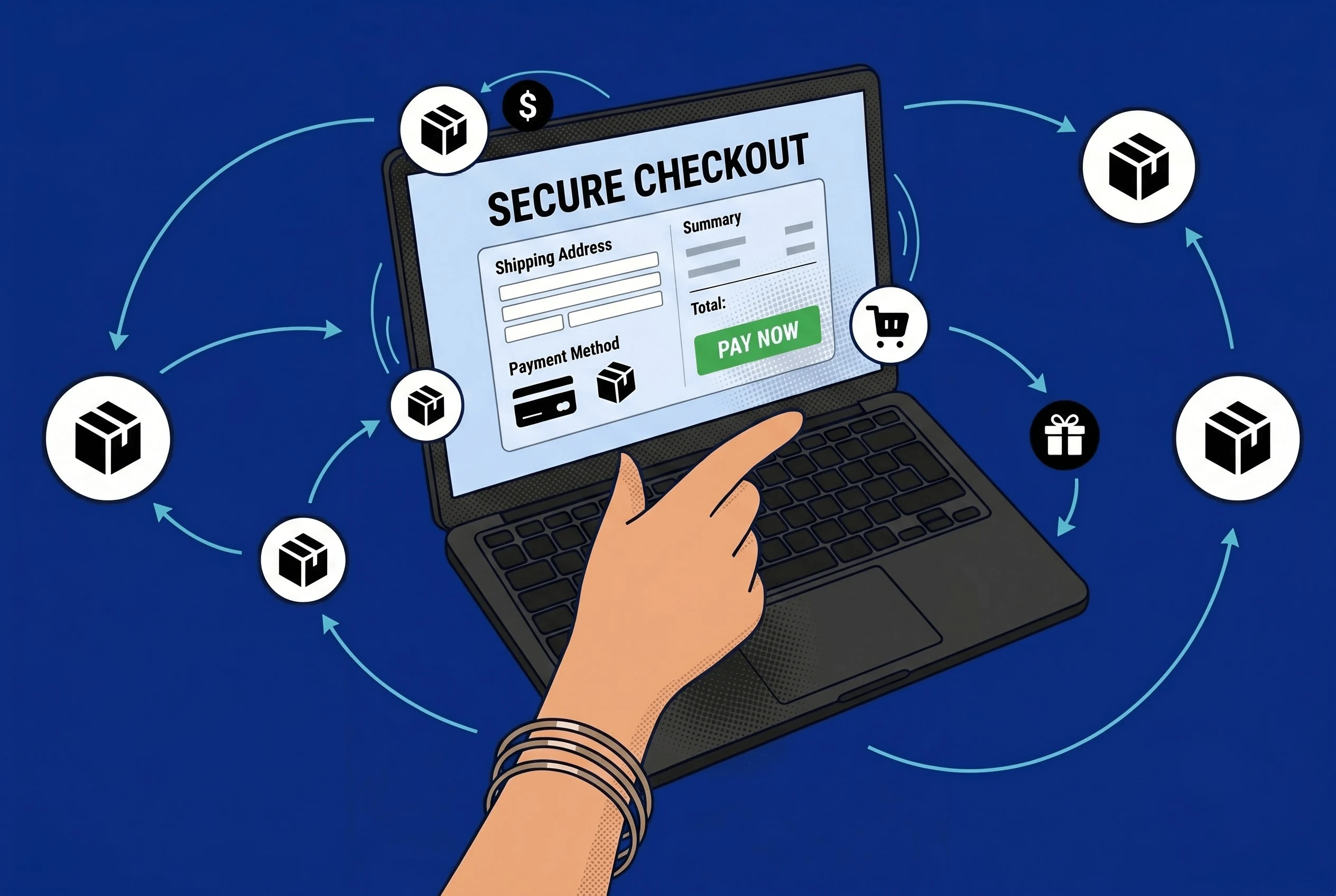
Creating a good shopping cart experience.
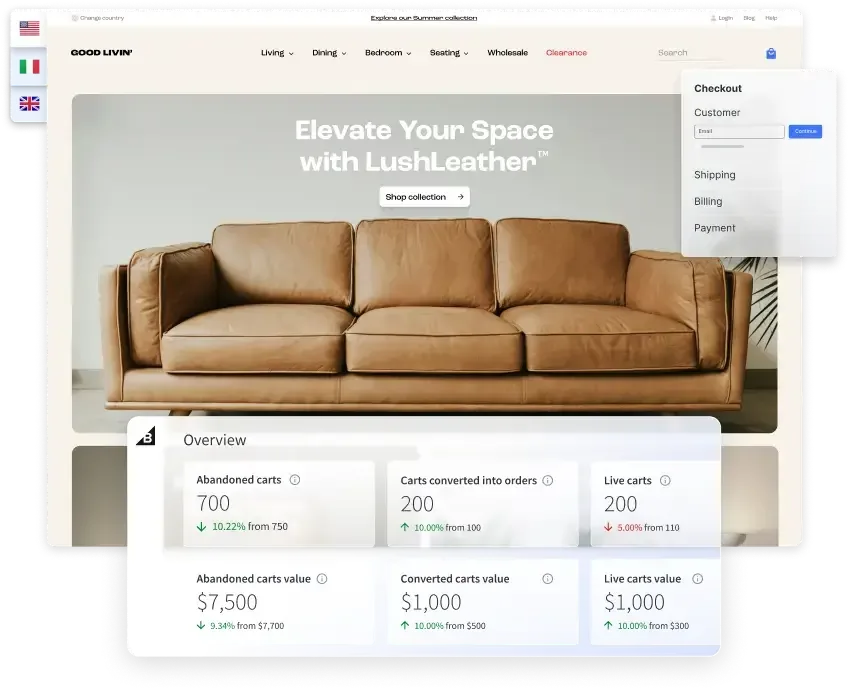
A smooth cart-to-checkout experience ensures the shoppers your ads paid for actually complete their purchase. Some platforms even factor checkout quality into the landing page user experience that drives your quality score, so friction here costs you twice. A strong setup includes a clear interface, obvious CTAs, and multiple payment options. BigCommerce supports this with an optimised one-page checkout that reduces abandonment, along with a wide range of integrated payment providers so shoppers can pay their way.
Using Google Shopping ads.
Google Shopping ads showcase your product image, price, and store name directly in search results, giving shoppers the essential details upfront and capturing those with clear intent to buy. They're especially effective at grabbing mobile shoppers' attention. In 2024 – 2025, Shopping inventory is increasingly served through Performance Max campaigns, which pull from your product feed to place Shopping ads across Google's full network alongside Search, YouTube, and Display — all optimised toward a single conversion goal.
Set up conversion tracking properly.
Conversion tracking is the foundation everything else rests on; without it, every optimisation decision is guesswork. You can't know which keywords, ads, or campaigns increase sales unless you're measuring the actions shoppers take after clicking. The 2024 standard is Google Tag Manager paired with GA4 ecommerce tracking: GTM lets you deploy and manage tracking tags without editing site code, while GA4's ecommerce events capture the full funnel from product view, and from add-to-cart to checkout. Set this up before scaling spend, verify that conversions are firing correctly, and connect the data back to your ad platforms so automated bidding has accurate signals to optimise against.
How to measure ecommerce PPC performance
You can't optimise what you don't measure, and PPC generates more data than almost any other digital marketing channel. The trick is focusing on the handful of metrics that actually tell you whether your spend is paying off.
Key metrics: ROAS, CPA, CTR, conversion rate, and impression share.
Five metrics tell you most of what you need to know about campaign health:
ROAS (return on ad spend): revenue divided by ad spend. A 4:1 ROAS means you earned $4 for every $1 spent. This is the headline profitability metric for ecommerce.
CPA (cost per acquisition): total ad spend divided by the number of conversions. It tells you what each sale or sign-up actually costs you to win.
CTR (click-through rate): clicks divided by impressions. It signals how relevant and compelling your ad is to the people seeing it.
Conversion rate: the share of clicks that complete a desired action, such as a purchase. It reflects how well your landing page and offer turn interest into sales.
Impression share: the percentage of available impressions your ads actually received. A low number means budget or bid limits are leaving reach on the table.
Read these together rather than in isolation. A high CTR paired with a low conversion rate, for example, usually points to a mismatch between your ad's promise and what the landing page delivers.
What is a good ROAS for ecommerce PPC?
A healthy ecommerce ROAS is generally considered 4:1 or higher, meaning $4 in revenue for every $1 of ad spend, though the right target depends heavily on your margins and product category. In practise, real-world medians tend to run lower: across thousands of ecommerce brands in 2025, average Google Ads ROAS landed around 3.68:1, and Google Ads posted the highest median ROAS among major platforms at roughly 3.5:1, ahead of Facebook at about 2.2:1.
The number alone means little without context. A 3:1 ROAS on a high-margin product can be very profitable, while a 5:1 ROAS on a thin-margin item might not cover costs after shipping and returns. The disciplined move is to calculate your break-even ROAS from your contribution margin first, then set targets above it. For Google Ads ecommerce conversion rates, a reasonable benchmark to aim for is roughly 2.5 – 3.5%, with stronger ad campaigns pushing higher.
How to track performance in Google Ads.
Accurate tracking starts with proper setup, and the 2024 standard is Google Tag Manager paired with GA4 ecommerce tracking. GTM lets you deploy tracking tags without editing site code, while GA4's ecommerce events capture the full funnel from product view, and from add-to-cart to checkout. Linking your GA4 property to Google Ads then feeds conversion and revenue data back into the platform, which makes ROAS and CPA reporting reliable. This also gives automated bidding accurate signals to optimise against.
Once tracking is live, the Google Ads dashboard becomes your command centre: monitor ROAS, CPA, CTR, conversion rate, and impression share at the campaign, ad group, and keyword level, then segment by device, location, and time of day to see where performance concentrates. Without this foundation, your ROAS and conversion figures are unreliable, and every optimisation built on them is guesswork.
The final word
Ecommerce PPC is still one of the fastest, most measurable ways to get your products in front of shoppers who are ready to buy. Unlike SEO, it brings traffic and data almost immediately, and today's platforms hand you sharp targeting, detailed analytics, and AI tools to reach the right customer at the right moment.
But PPC rewards discipline. It needs constant monitoring, regular testing, and a real grasp of best practises on every platform you run. That's why successful stores either build genuine in-house know-how or hire a pro — skip it, and you'll pay for it in lower quality scores, higher CPCs, and weaker ROAS. Treat PPC as an ongoing investment, anchor every call to your margins and conversion data, and you've got a channel that grows right alongside your business.
FAQs about PPC ecommerce
Most ecommerce stores pay between $1 and $3 per click on Google Search, with broad, competitive terms running higher and Google Shopping clicks often cheaper. There's no single "right" number, since the goal is balancing enough clicks to drive revenue against an acceptable customer acquisition cost. Key variables to weigh:
Profit margins: how much you can afford to spend per sale.
Customer lifetime value: higher repeat-purchase value justifies higher CPCs.
Conversion rates: stronger conversion supports more aggressive bids.
Seasonality: demand swings move CPCs up and down throughout the year.
Improve quality score by tightening the relevance between your keywords, ad copy, and landing page, since Google rates all three. Higher scores lower your CPC and lift ad placement. Focus on four areas:
Re-evaluate keywords: keep them closely tied to your ad copy and landing page.
Adjust ad copy: include target keywords and add extensions like site links and callouts.
Optimise page speed: faster pages reduce bounce and improve experience.
Add negative keywords: block irrelevant searches that drag down relevance.
Seasonality drives major swings in search volume, competition, and CPC, so budgets and bids need to flex with demand.
During Black Friday and Cyber Monday, for example, users search volume and auction prices spike sharply as retailers compete for holiday shoppers, while categories like back-to-school surge in late summer then drop off. Adjust spend to match these cycles or risk overpaying off-peak and missing reach during your most profitable windows.
Yes, PPC is worth it for most ecommerce businesses, especially for high-intent product searches where organic rankings are slow to win or crowded with established competitors. It delivers near-instant visibility, measurable returns, and precise targeting, putting your products in front of shoppers the moment they're ready to buy. The caveat is that it pays off only with consistent management and tracking.
PPC is paid traffic you buy through ad auctions, while SEO is organic traffic you earn by ranking in search results. PPC delivers immediate visibility but stops the moment you stop paying; SEO builds slowly but compounds over time. Here's how they compare:
Speed: PPC drives traffic within hours; SEO takes months to gain traction.
Cost model: PPC charges per click; SEO has no per-click cost but requires ongoing content and optimisation investment.
Longevity: PPC visibility ends with your budget; SEO rankings persist once established.
Intent and placement: PPC ads sit at the very top of results; strong SEO captures the organic listings that appear below.
Best use: PPC suits launches, promotions, and competitive terms; SEO suits long-term, sustainable traffic.
Most successful stores run both: PPC for immediate sales and SEO for durable, lower-cost traffic over time.
Find your favourite features.
Explore all of the capabilities of the BigCommerce platform.