






Written by
Mandy Spivey
Social Commerce
Get The Print Version
Tired of scrolling? Download a PDF version for easier offline reading and sharing with coworkers.
A link to download the PDF will arrive in your inbox shortly.
Key highlights:
Social commerce is now a core retail channel, enabling shoppers to discover and buy products directly within social media platforms and driving the market toward more than $1 trillion in global sales by 2029.
By combining ecommerce functionality with mobile-first social experiences, social commerce reduces friction in the buying journey and captures impulse purchases traditional ecommerce often loses.
Leading platforms like TikTok, Instagram, Facebook, YouTube, Snapchat, and Pinterest offer built-in shopping tools that let brands meet customers where product discovery already happens.
Gen Z and millennials are accelerating adoption, responding strongly to influencer marketing, user-generated content, and personalised shopping experiences in social feeds.
Brands that integrate social commerce into a broader omnichannel strategy can increase reach, build trust through social proof, and drive repeat purchases
If you’ve had the inclination to take your ecommerce presence into new realms and sell on social media, you’re not alone.
Social commerce is no longer a trend; it's a trillion-dollar reality that shows no signs of slowing.
Researchers project the industry to more than double from $683 billion in 2024 to over $1 trillion by 2029, highlighting the massive opportunity for businesses in this space.
Social commerce has emerged as a transformative force in retail, fundamentally changing how businesses connect with and sell to consumers. By merging ecommerce capabilities with social media platforms, retailers create seamless shopping experiences, allowing customers to discover and purchase products without leaving their favourite social networks.
Social media's influence extends beyond direct sales, playing a crucial role in the consumer discovery journey. According to a 2024 survey, these platforms helped four in ten social media users to find new products and brands.
The social selling commerce revolution is here, and represents a critical opportunity for ecommerce businesses.
What is social commerce?
Social commerce is a segment of ecommerce in which merchants sell products directly through social media platforms, allowing potential customers to interact with brands, browse goods, and make purchases.
Unlike social media marketing, social commerce allows customers to cheque out directly from social media platforms. When set up smartly, the social platform links directly to the retailer's product page, where customers can also complete their purchases.
Ebook: Win Customers Across Every Channel
Get expert insights on data, branding, and marketing strategies to grow sales on every major ecommerce channel.
Social commerce vs. ecommerce
While they may fall under the same umbrella, social commerce and ecommerce are very different concepts.
Ecommerce refers to an online shopping experience via a website or branded app, often built on an ecommerce platform like BigCommerce. Customers may access these websites on their desktop or mobile devices; however, the ecommerce sales funnel generally looks the same.
Digital ads, social media content, and other marketing tactics all act as top-of-the-funnel activities designed to direct customers to the online store. However, even after reaching the store, the customer must go through more steps in the purchase journey. Each additional step increases the customer's risk of losing interest, representing the potential of losing their business, and ultimately, sales and conversions.
Not to mention 93% of active users access the internet through mobile devices, and mobile users have a cart abandonment rate of nearly 86%. The numbers don’t lie; not all ecommerce sites are mobile-friendly.
Here's where social commerce steps in.
Social commerce brings the store to the customer rather than redirecting them to an online store, meeting them wherever they are. In fact, upwards of 63.9% of the world's population uses social media, with the daily usage averaging out to 2 hours and 21 minutes. This represents a huge opportunity for ecommerce brands looking to increase their share of the market and expand their omnichannel retail presence.
By letting the customer cheque out through social media platforms, social commerce removes unnecessary steps and streamlines the buying process. This convenience creates a more frictionless journey for the customer and more sales for the retailer.
Plus, since social media platforms are built to be mobile-friendly, social commerce is a highly accessible way to reach more targeted audiences.
Top social commerce platforms
While Instagram and Facebook lead the way in social commerce functionalities, other social media sites, such as Pinterest, TikTok, YouTube, and Snapchat are expanding their offerings. Since each platform serves a unique purpose and attracts a niche audience, it offers comparative strengths that shape its approach to social commerce.
In order to choose the right social selling avenues for your business, it’s important to consider which platforms are most popular with your target audience. We’ve compiled a list of the most popular social media platforms and their estimated monthly active users (as of February 2025):
Social Platform | Active Users |
3,070 million | |
3,000 million | |
YouTube | 2,580 million |
TikTok | 1,990 million |
Snapchat | 932 million |
578 million |
Below, we'll dive into some of the key features of the top social commerce platforms to help you choose the best one for your business.
Facebook.
Facebook was the first social network to surpass one billion registered accounts and boasts more than three billion monthly active users.
Launched in 2020, Facebook Shops helps small and medium-sized businesses expand their social selling presence and build shoppable storefronts. The platform is mobile-friendly, free, and fully customisable. You can import an existing product catalogue or even create a new one.
Once your customers discover your page and products, Facebook tailors future product recommendations based on the shopper's unique preferences and search history, personalising the customer experience.
Shoppers may complete the purchase within the Facebook platform or click through to your ecommerce site. You can contact the customer via Facebook Messenger to answer questions and offer support.
You can also stream your next live shopping event through Facebook Live, which encourages real-time engagement where you can directly answer questions and build trust with people watching.
Of course, you can also use your Facebook page to share company news, engage with existing and potential customers, and introduce new products.
Instagram.
With 30.4% of Gen Z using Instagram for product discovery, the app has quickly gained traction as one of the market's most promising social commerce platforms.
Known for its thumbstopping photos, stories, and reels, Instagram is the ideal space for sharing high-res brand imagery. If your customers are already engaging with your content, why not place your product front and centre and turn that engagement into sales?
To set up Instagram Shopping, you need only a Facebook business profile, which links your Facebook Shop to Instagram. Then you can easily upload a product catalogue and denote product tags for each item, allowing you to create shoppable posts and streamline purchases directly from the platform.
Additionally, Instagram shoppers can purchase through product stickers embedded in your story. Rather than uploading a shoppable post to your timeline, you can choose an image for your story, select the sticker icon in the top right corner, and select the product you want to link. Lastly, move the sticker to your desired location, customise its colour and size, and share it on your story.
YouTube.
As the world’s largest video platform, YouTube plays a growing role in social commerce by blending long-form content, creator influence, and shoppable integrations. Product discovery on YouTube often happens through reviews, tutorials, and unboxings, where creators demonstrate real-world use cases and build trust over time.
YouTube Shopping allows brands and creators to tag products directly in videos, livestreams, and Shorts, making it easier for viewers to explore products while watching content. These shoppable features shorten the path from consideration to purchase, especially for higher-involvement products that benefit from detailed explanations or demonstrations.
With its strong search functionality and evergreen content, YouTube supports social commerce strategies focused on education, comparison, and intent-driven discovery. For brands, this makes YouTube a valuable platform for turning product research into measurable sales while extending the lifespan of shoppable content beyond a single post.
TikTok.
Moving far beyond viral dance videos, TikTok is quickly becoming more than just a short-form video-sharing app. With shoppable posts, livestream shopping capabilities, and opportunities for influencer marketing, it is a social commerce platform worth noting.
Even before launching its TikTok For Business feature, the phrase "TikTok made me buy it" was already all too common. With a unique ability to make lesser-known users and brands go viral (seemingly overnight), TikTok has the power to introduce your business to millions of new potential customers.
Many of TikTok's social commerce capabilities have focused on product ads that appear as native videos on users' For You feeds. Below each advertisement, users can tap the "Shop Now" button, which links them directly to the merchant's ecommerce site to complete their purchase. Live video shopping and shoppable videos also give users the opportunity to tap and learn more about products, potentially leading to purchasing in the app.
TikTok’s "Find Similar" feature, which appears as a popup when pausing a video, utilises AI to scan, identify, and locate similar products, allowing users to purchase what they see on screen in just a few taps.
And brands have the option to build a shoppable storefront within TikTok through the Shopping tab. TikTok Shop added a shop tab to business profiles, where they can sync their static product catalogue. Users purchase without leaving the app, reducing friction in the buying process.
Now, BigCommerce's partnership with TikTok allows merchants to connect their online stores with their TikTok profiles, allowing them to engage with shoppers and share their products with more users.
Snapchat.
Snapchat approaches social commerce through immersive, mobile-first experiences designed for real-time engagement and visual interaction. With a user base that skews younger, the platform is particularly effective for reaching Gen Z shoppers who value authenticity, creativity, and speed.
Snapchat’s social commerce tools include shoppable ads, product catalogues, and augmented reality (AR) try-on experiences that let users visualise products before purchasing. These AR features are especially effective for categories like fashion, beauty, and accessories, where seeing a product in context helps reduce uncertainty and increase confidence.
By integrating shopping directly into stories and ads, Snapchat enables brands to meet consumers in moments of discovery without disrupting the user experience. As part of a broader social commerce marketing strategy, Snapchat works best for brands focused on visual storytelling, impulse-friendly products, and engaging younger audiences through interactive formats.
Pinterest.
The great thing about Pinterest is that most users care far more about the content than the creator. Compared to platforms like Instagram and Facebook (where the user's or brand's influence may hold more weight), Pinterest allows you to focus more on creating great products and less on building their reputations.
Millennials have been especially great customers on the app, with upwards of 44% making a purchase on the platform.
Launched in 2010, Pinterest began as a platform to help people find inspiration for all aspects of their lives, whether home decor, fitness and wellness, or fashion. In 2015, Pinterest started offering shoppable pins to an exclusive set of brands, allowing them to add a "Buy" button to their pins.
Brands can create Product Pins, which display updated pricing and stock information, and allow shoppers to save products directly on their boards. If shoppers are ready to buy, they can tap on the Product Pin, which redirects them to the product page on the brand's website.
The platform also offers features for insights and optimisation, including an Ads Manager. This tool supports businesses in building and measuring successful campaigns, and allows them to track results and expand their reach over time by providing advice on discovering new audiences and retargeting existing customers.
Social commerce purchasing by age
The demographic breakdown reveals that while social commerce appeals to all age groups, Gen Z and Millennials are the most enthusiastic adopters.
These younger consumers, who combine digital nativeness with purchasing power, are exceptionally responsive to influencer recommendations and celebrity endorsements. They seek more than just transactions — they want entertaining and reliable shopping experiences.

Find your favourite features.
Explore all of the capabilities of the BigCommerce platform.
Benefits of social commerce
If you still need convincing that social commerce has enormous potential for leveraging new audiences and scaling globally, here are a few more points to consider:
1. There are vast numbers of potential customers on social media.
Statista reports that over five billion people used social media worldwide in 2025, and this will increase to over six billion in 2030.
From product discovery to the cheque-out process, businesses have a tremendous opportunity to get their products in front of new faces and grow their audience exponentially.
Considering the high level of impulse buying, particularly among Millennials and Gen Z, social selling holds enormous potential for attracting customers and increasing sales.
2. Enhanced social media presence and brand awareness.
Instead of siloing your social media and ecommerce website, social commerce gives brands the power to merge the two. This huge branding opportunity allows you to create brand awareness and stay top-of-mind to your customers through daily content.
One key way to build brand awareness is through influencer marketing.
Every ecommerce brand's dream is to have a professional athlete, actress, or celebrity endorse their products. Unfortunately, this isn't an accessible option for many smaller brands on a tight budget.
Luckily, influencer marketing has taken on a new meaning in recent years. Customers are looking to something other than A-list celebrities for advice. Instead, they're seeking authenticity, primarily from micro-influencers whose lifestyles are similar.
Based on 2024 research from Statista, 45% of Gen Z shoppers purchased products from influencers or celebrity brands; millennials shoppers grew to 33%, while Gen X engagement rose to 23%.
3. You can reach your target audience.
Social commerce is all about meeting your customers where they are, most of whom are already scrolling on social media. When used strategically, social selling allows you to be more authentic by sharing your brand voice through creative content.
Many social media platforms also offer analytics capabilities, letting you learn more about users and their unique buying behaviours. Use this data to tailor your content and products directly to your target audience.
Take time to gather demographic data about your customers, identify what they like and don't like, and even survey them directly to understand better how you can best serve them. Then, reach your audience with products and messaging that match their needs.
4. Convenient, frictionless buying.
Social commerce features such as the Buy Button and in-app checkout help remove unnecessary steps in the buying process, reducing the chance that a customer loses interest and leaves your page.
You can minimise this risk and increase sales by creating a seamless buying process that keeps users in the app throughout their purchase.
For instance, rather than redirecting an Instagram user from the app and transferring them to your traditional ecommerce site, the platform now offers a "Checkout on Instagram" option. Instead of disrupting their scrolling time, you can make it easy for customers to discover your brand while still enjoying their time on social media.
5. You can generate social proof.
The reality of ecommerce is that many shoppers may need more time to trust your brand. Many may only be convinced once they read customer reviews, compare products, or talk to other customers who can vouch for your product or service.
Luckily, social commerce comes with built-in social proof. Through user-generated content (UGC) such as comments, likes, follows, and shares, brands can create a positive feedback loop that keeps customers returning for more. The more users interact with and promote your products, the more likely other customers will trust your brand.
You can start building social proof today by incentivising customers to share your content, such as coupon codes, discounts, or giveaways. Another way to do this is by creating a fun hashtag that customers can use to share pictures and video content of products and engage with your brand's community.
6. Improved customer loyalty through personalised experiences.
When social platforms deliver tailored content and recommendations, customers experience a more meaningful connection with brands. Their feeds transform into personalised shopping experiences that reflect their unique interests and previous purchases.
By analysing social media interactions, brands can segment their audience and create targeted campaigns that speak directly to specific customer needs and preferences. This personalisation extends to customer service, where quick, contextual responses referencing previous interactions help build stronger relationships and trust.
Each interaction refines the experience, creating a dynamic loop of engagement and understanding. As a result, customers develop genuine connections with brands, leading to more frequent purchase decisions and lasting loyalty.
7. Opportunities for viral marketing.
Viral marketing on social platforms can rapidly expand brand reach through shareable content that resonates across cultural boundaries. When content goes viral, it often transcends its original market, creating opportunities to enter new regions organically. Successful campaigns typically combine universal appeal with local cultural sensitivity, using platform-specific features like TikTok trends or Instagram Reels to maximise engagement.
The real power comes from knowing exactly how each platform works and what makes people want to share your content. When done right, viral moments feel like magic — each satisfied customer becomes an advocate, spreading the word organically through their social circles.
Examples of social commerce success
Let's examine a few retailers who have launched effective social commerce campaigns to see some of the top ones. By leveraging social commerce platforms, these retailers have driven sales and created a seamless online shopping experience.
Heat Transfer Warehouse.
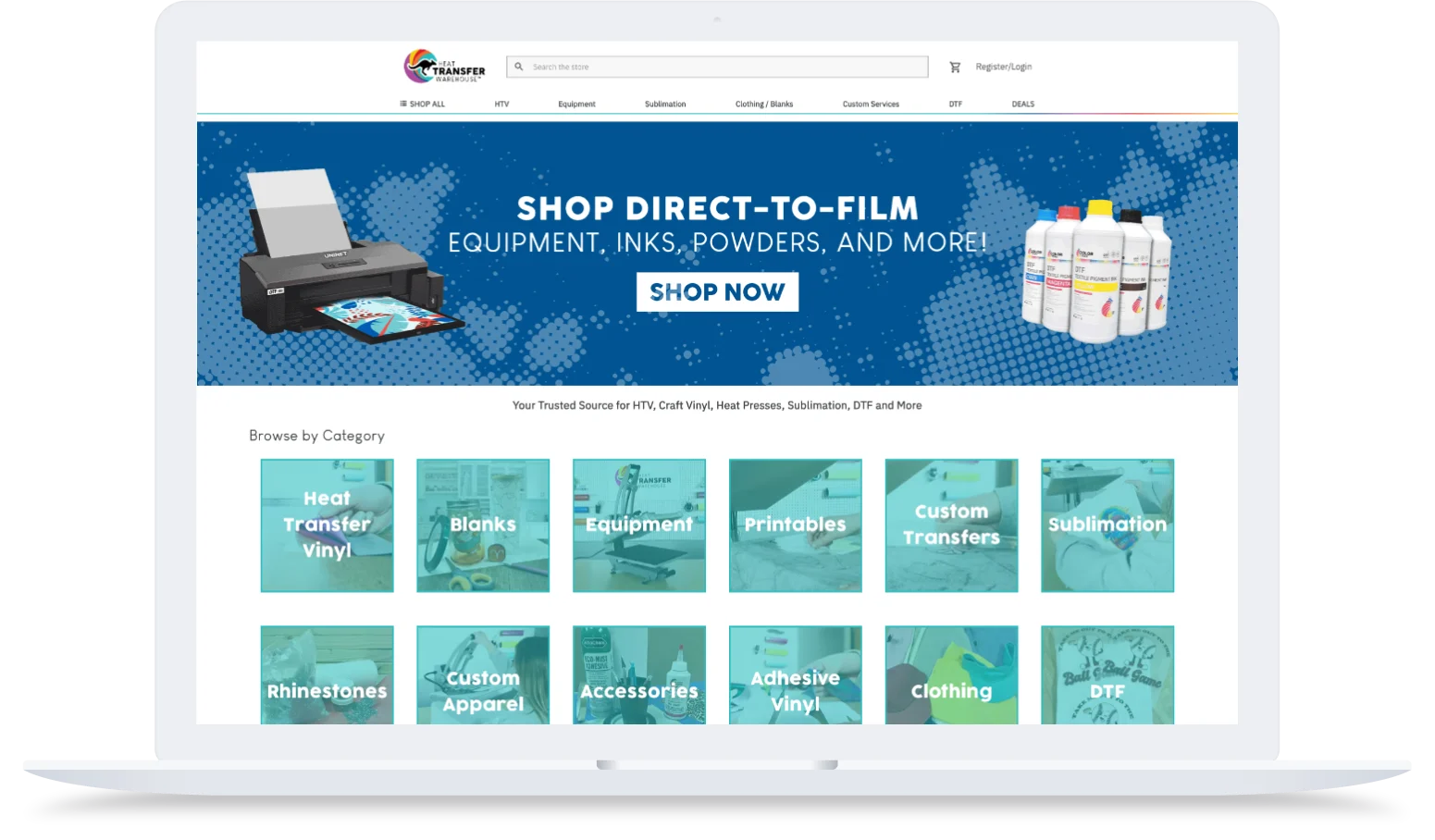
Case Study: Heat Transfer Warehouse
Heat Transfer Warehouse grew from a simple supplier in 2010 into a multifaceted business powerhouse. By acquiring Shirts From Fargo, they expanded beyond B2B sales into direct-to-consumer markets. Success in these areas created a complete ecosystem for custom product decoration.
Social media efforts took flight in 2019 when the team embraced video storytelling. Quick, catchy clips on Instagram Reels and TikTok showcase their products in action. Trending music accompanies these 30-second tutorials, making complex processes appear simple for crafters and businesses alike.
Detailed guidance lives on their YouTube channel, where viewers find comprehensive instructions. Creative experimentation shapes their content strategy, leading to engaging posts across platforms. Through persistence and adaptability, Heat Transfer Warehouse built impressive followings on TikTok, Instagram, Facebook, YouTube, and Pinterest.
Badgley Mischka.

For over three decades, the global fashion label Badgley Mischka has made a statement in the fashion world with its timeless evening wear and accessories. With an international presence in over 200 countries, the 35-year-old fashion label is also making waves in the digital space.
Turning to BigCommerce's expansive app marketplace, they found the right tools to help drive sales across multiple sales channels. Although they were already selling on Instagram Shop, Facebook Shop, Amazon, and TikTok Shop, at the advice of a BigCommerce Omnichannel Growth Manager, the fashion brand launched a new marketplace: Google Shopping, where business exploded.
For Badgley Mischka, the future is all about one thing: growth. From increasing site personalisation to refining online marketplaces to expanding globally, Badgley Mischka is doing "anything and everything we can to grab as many customers out there as possible," said owner Katie Ouaknine.
Discover How AI is Transforming the Customer Experience
AI is quickly reshaping the landscape of ecommerce. Learn how you can prepare for the next wave of AI commerce.
How BigCommerce helps support social commerce
BigCommerce turns social media into a sales powerhouse. Businesses can manage their social commerce operations from a simple dashboard, track performance, and boost sales with best-in-class social commerce tools.
Seamless integration with social media channels.
BigCommerce smoothly connects social selling with Facebook, Instagram, and TikTok to expand your reach. Retailers can showcase products in engaging posts, handle transactions, and attract new customers right where they spend time online.
Unified management for omnichannel commerce.
Social selling is but one part of the whole omnichannel shopping experience. To optimise this, it helps to have the tools to make this experience seamless, from finding a product on social media to purchasing on marketplaces like Amazon, Walmart, or Etsy.
BigCommerce and Feedonomics lets you control all your online stores from one screen. It keeps prices and inventory accurate everywhere you sell, tracks results, and adjusts your strategy to boost social commerce sales.
Advanced tools for advertising and audience growth.
Innovative tools like Feedonomics help your products shine on social media, making ads more effective. AI technology improves how items appear in searches while targeted promotions reach online shoppers at the perfect time.
The final word
Social commerce is now a core component of modern retail, enabling shoppers to discover and purchase products directly within the social platforms they use every day.
What began as a discovery channel has evolved into a full-funnel experience that blends content, community, and commerce into a single, seamless journey.
As platforms like TikTok, Instagram, Facebook, Snapchat, YouTube, and Pinterest expand native shopping capabilities, successful brands are treating social commerce as part of a broader omnichannel commerce strategy. This approach ensures consistent product descriptions, data, pricing, and customer experiences across every touchpoint while reducing friction in the path to purchase.
The value extends beyond convenience. Social commerce gives businesses real-time insight into engagement, user-generated content, and consumer intent, helping them personalise experiences and build trust at scale. With Gen Z and millennials leading adoption and the market on track to surpass $1 trillion, brands that invest in a clear social commerce strategy today will be best positioned to turn everyday scrolling into sustainable growth.
Ready to get started? Our representatives are here to show you the power of the BigCommerce platform.
FAQs about social commerce
Measuring social commerce success requires tracking multiple metrics that reveal different aspects of your business health. Picture your strategy as a garden where various plants need different care to flourish. Sales conversion rates show whether people move from browsing to buying, while engagement metrics like shares and comments indicate how well your content resonates with viewers. Customer lifetime value helps determine if buyers return for more purchases over time.
Each social platform offers unique advantages for connecting with potential buyers. TikTok excels at capturing attention through short-form videos that demonstrate products in action or share authentic customer experiences. Instagram provides a visual showcase where high-quality images and storeys can highlight product details and lifestyle integration. Facebook builds deeper relationships through groups and community discussions, enabling customers to share experiences and ask questions about products they're considering.
Understanding platform-specific metrics deepens your insight into performance. TikTok's video completion rates and sound-on viewing statistics reveal content effectiveness. Instagram's social shopping feature tracking shows which products catch the eye and drive sales. Facebook's group activity measurements demonstrate community health through discussion frequency and member growth.
Remember to align these metrics with your business objectives. Growing brand awareness requires different measurements than maximising immediate sales.
Small businesses have unique advantages in social commerce that big brands often need help replicating. Think of social commerce as a neighbourhood marketplace where personal connections matter more than massive advertising budgets. Your business can thrive by building genuine customer relationships through authentic storytelling and responsive engagement.
Micro-influencers represent a compelling opportunity because their followers typically trust their recommendations more than celebrity endorsements. Consider partnering with content creators who naturally align with your brand values and aesthetic, like local photographers, artists, or lifestyle bloggers who already appreciate your products. These collaborations often generate meaningful engagement since micro-influencers maintain closer connections with their communities than well-known influencers.
Platform-specific features provide excellent opportunities to increase visibility without substantial marketing investments. For example, Instagram Reels, TikTok challenges, and Pinterest's shopping features help your content reach interested audiences organically. Successful social commerce requires understanding each platform's unique culture and adapting your approach accordingly. When you craft content that feels native to each platform while maintaining your brand's distinctive voice, engagement naturally follows.
AI works around the clock, learning from every customer interaction to make social shopping more engaging and effective. Modern AI tools analyse countless data points about browsing patterns, purchase history, and social media behaviour to create profoundly personalised shopping experiences.
AI-powered chatbots have evolved beyond simple question-and-answer machines into sophisticated virtual shopping assistants. Consider how these digital helpers can guide customers through product catalogues, answer detailed questions about specifications, and even detect emotional cues in customer messages to provide more empathetic responses. Natural language processing enables these assistants to understand context and maintain conversations that feel remarkably human, while machine learning helps them improve with each interaction. Agentic AI streamlines the entire shopping experience, from product curation to secure checkout.
Predictive analytics represents perhaps the most potent application of AI in social commerce. It helps businesses anticipate market shifts before they occur. By examining historical online sales data, social media trends, and seasonal patterns, AI systems can forecast which products might surge in popularity, when to adjust pricing, and how to optimise inventory levels.
Machine learning algorithms continuously refine these predictions by incorporating new data from customer interactions, market conditions, and emerging social media conversations. Understanding these patterns allows businesses to stay ahead of social commerce trends rather than merely reacting to them.
Interestingly, social networks ranked globally by the number of users do not reflect the top revenue-producing platforms for social commerce. The Chinese version of TikTok, Douyin, supplants all the major players in revenue.
Chinese platforms, particularly Douyin and WeChat, generate the most revenue in the global social commerce market. While the international version of TikTok is proliferating, it still needs to catch up to its Chinese counterpart, Douyin. Based on research released by Statista, these platforms grew to the following numbers in revenue by the end of 2025:
Douyin (Chinese version of TikTok): $237 billion
WeChat: $181 billion
Facebook and Instagram: Projecting combined revenues of ~ $67 billion
Tiktok (international version): $7.4 billion
Products that perform best in social commerce are eye-catching, trend-driven, and impulse-buy friendly. Based on a report compiled by Statista, the most popular categories include:
Apparel (25.6%)
Beauty products (19.4%)
Home goods (13.5%)
These items often leverage influencer endorsements, live shopping, and user-generated content (UGC) to encourage quick engagement and trust, particularly on platforms like Instagram, TikTok, and Pinterest.
Influencer marketing boosts social commerce conversions by fostering trust through authentic recommendations from people shoppers see as peers, rather than traditional ads. By integrating shoppable content directly into social platforms, influencers shorten the sales funnel, transforming engagement into immediate, in-app purchases. Smaller creators often drive higher conversion rates, while larger influencers boost brand and product awareness overall.
A few of the biggest challenges in adopting social commerce include:
Building consumer trust amidst fraud concerns
Navigating platform-owned data with limited insights
Managing high return rates from impulse buying
Overcoming low organic visibility
Additionally, technical integration of catalogues, minimal platform customisation, and keeping up with fast-changing algorithms hinder success when social selling.
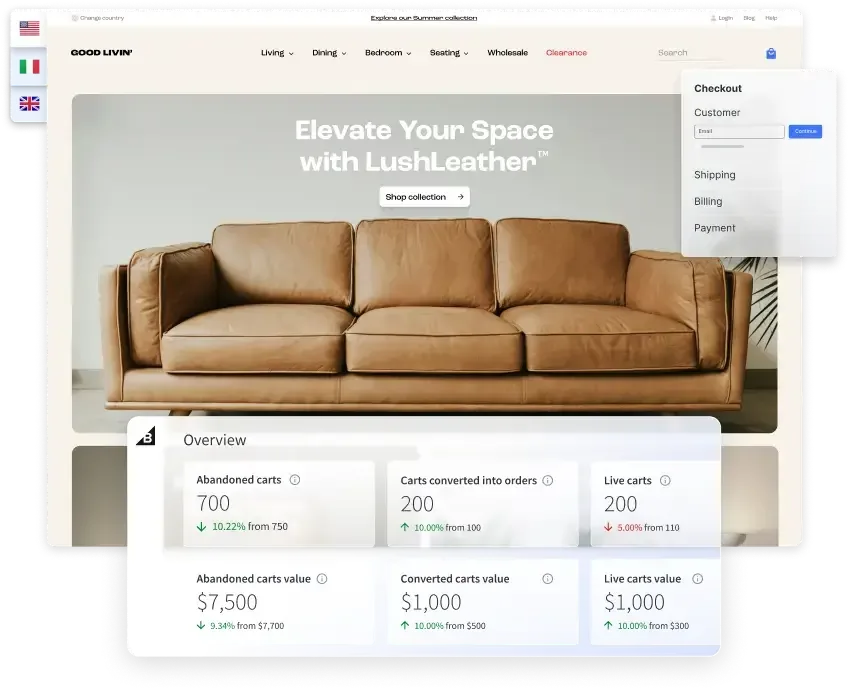
⏰ Isn't about time that you evaluated your ecommerce platform?
Request a demo to see how the BigCommerce platform is different.